
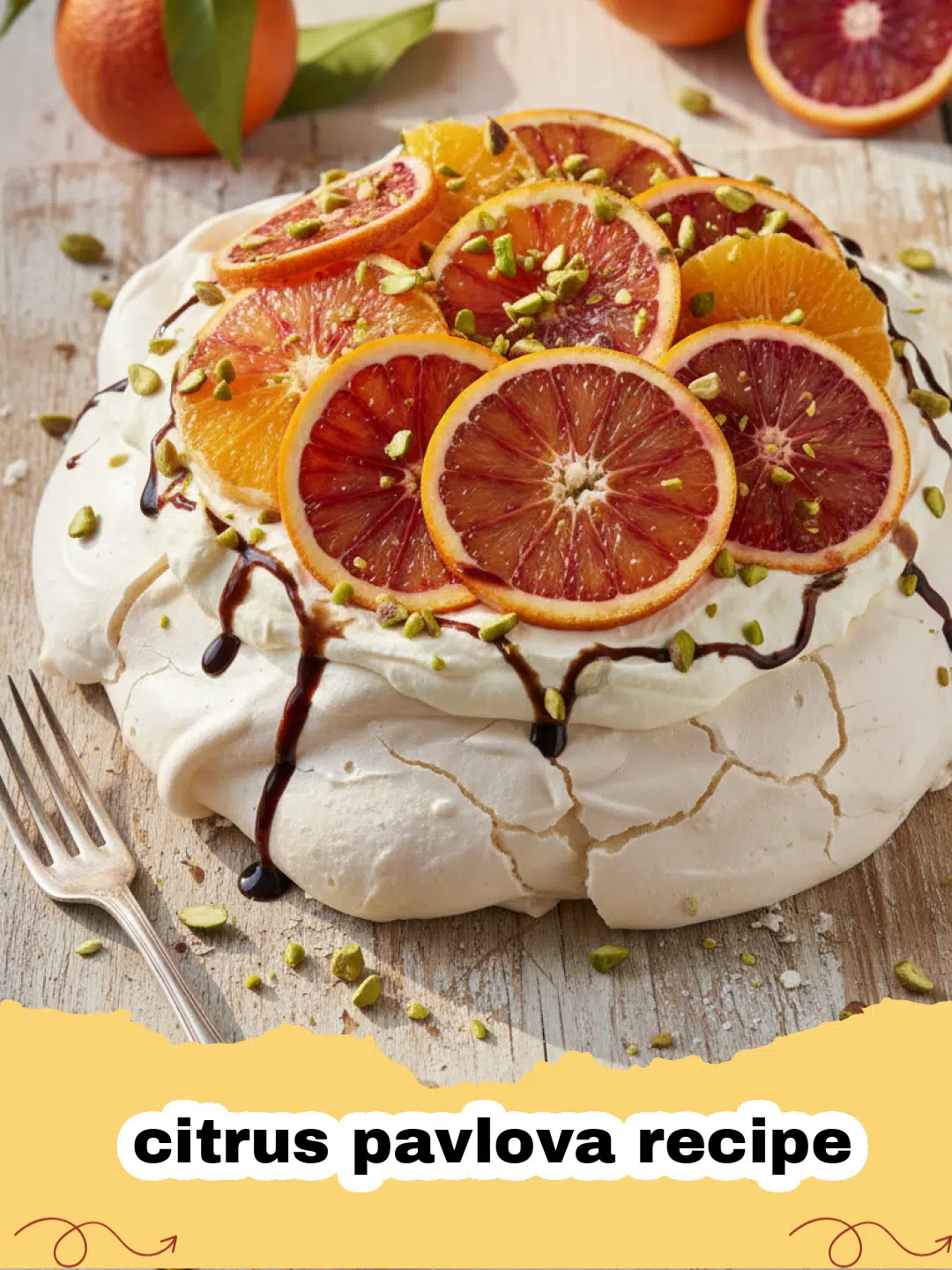
Finding the perfect citrus pavlova recipe was a journey that began on a breezy afternoon in my grandmother’s coastal garden, where the scent of lemon blossoms hung heavy in the salt-tinged air. I remember watching her whip egg whites with a rhythmic precision that seemed almost magical, transforming humble ingredients into a cloud-like structure that defied gravity. She always said that a citrus pavlova recipe wasn't just about the sugar and the heat; it was about capturing the essence of the season. Over the years, I have refined her technique, balancing the intense sweetness of the meringue with the sharp, bright acidity of fresh oranges, lemons, and grapefruits. This citrus pavlova recipe has become my signature dessert for spring celebrations and summer soirées, offering a light-as-air finish to any meal that leaves guests asking for seconds. It is a dish that speaks of sunshine and joy, and today, I am thrilled to share every secret I have learned with you.
Why This Recipe is a Must-Try
- The Ultimate Texture Contrast: This citrus pavlova recipe delivers a crisp, delicate outer shell that shatters upon impact, revealing a soft, marshmallow-like interior that melts on the tongue.
- Perfectly Balanced Flavors: Unlike traditional pavlovas that can be overly cloying, our citrus pavlova recipe uses a homemade citrus curd and fresh zest to provide a refreshing counterpoint to the sugary meringue.
- Naturally Gluten-Free: It is an elegant, sophisticated option for those with dietary restrictions without ever feeling like a compromise.
- Stunning Visual Appeal: The vibrant colors of blood orange, lime, and lemon make this citrus pavlova recipe a literal showstopper on any dessert table.
Key Ingredient Notes
To master this citrus pavlova recipe, you must start with the right ingredients. First and foremost are the egg whites. For the most stable foam, use eggs that are at room temperature. Cold egg whites are easier to separate, but room temperature whites whip up to a much greater volume, which is essential for a lofty citrus pavlova recipe. Ensure your bowl is completely grease-free; even a tiny drop of yolk or a smudge of oil will prevent the whites from peaking.
The second pillar of this citrus pavlova recipe is superfine sugar (also known as castor sugar). Because meringue is baked at a low temperature, regular granulated sugar may not dissolve completely, leading to a gritty texture or "weeping" where syrup leaks out of the base. If you can only find granulated sugar, pulse it in a food processor for a few seconds before using it in your citrus pavlova recipe. Finally, the citrus curd provides the heart of the flavor. While store-bought is an option, making a quick curd with fresh juice and zest will elevate your citrus pavlova recipe to professional heights.

Step-by-Step Guide with Pro Tips
Preparation is the key to success when executing a citrus pavlova recipe. Begin by preheating your oven to a low temperature. Meringue doesn't really "cook" in the traditional sense; it dries out. A low, slow heat ensures the outside stays snowy white while the inside stays tender. When you begin whipping the whites for your citrus pavlova recipe, start on a low speed to build a stable network of small bubbles before increasing to medium-high. This prevents the structure from collapsing later.
As you add the sugar to your citrus pavlova recipe, do it one tablespoon at a time. This patience allows the sugar to fully incorporate. One of my favorite pro tips is to rub a little bit of the mixture between your fingers; if it feels smooth, you’re ready to bake. If it feels grainy, keep whisking. To store any leftover citrus components or prepared curd, I highly recommend using Basics Glass Food Storage to keep everything fresh and organized in your refrigerator.
When shaping the meringue for your citrus pavlova recipe, use a spatula to create a slight well in the center. This "nest" will eventually hold the pillows of whipped cream and the vibrant citrus fruits. Don't worry about perfection; the rustic, craggy edges are part of the charm of a homemade citrus pavlova recipe. Once baked, let it cool completely inside the oven with the door slightly ajar. This gradual cooling prevents the meringue from cracking too severely.
Variations & Serving Suggestions
While the classic citrus pavlova recipe focuses on lemons and oranges, don't be afraid to experiment. A Tropical Twist can be achieved by adding passion fruit pulp and lime zest to the cream. If you are looking for a deeper flavor profile, try a Blood Orange and Pomegranate version, which offers a stunning ruby-red hue that looks incredible against the white meringue. For those who love a bit of decadence, you might enjoy serving this alongside a slice of The Most Heavenly Dark Chocolate Cake with Strawberry Buttercream for a truly indulgent dessert buffet.
If you find yourself with extra citrus and want to try something different, consider making a Strawberry Jelly Cheesecake and topping it with some of the leftover citrus zest from this citrus pavlova recipe. When serving, always assemble the citrus pavlova recipe just before eating. The moisture from the cream and fruit will eventually soften the meringue, so for the best crunch-to-marshmallow ratio, wait until the guests are ready. Garnish with a few mint leaves for a pop of green that makes the citrus colors sing.
Nutrition Information
The following table provides an estimate of the nutritional content for one serving of this citrus pavlova recipe. Please note that values may vary based on specific ingredient brands and fruit sizes.
| Nutrient | Amount Per Serving |
|---|---|
| Calories | 285 kcal |
| Serving Size | 1 slice (approx. 120g) |
| Carbohydrate Content | 42 g |
| Sugar Content | 38 g |
| Protein Content | 4 g |
| Fat Content | 12 g |
| Saturated Fat Content | 7 g |
| Cholesterol Content | 45 mg |
| Sodium Content | 55 mg |
| Fiber Content | 1 g |
| Trans Fat Content | 0 g |
| Unsaturated Fat Content | 4 g |
Conclusion
Mastering a citrus pavlova recipe is a rewarding endeavor that brings a touch of elegance to any gathering. By following these steps and paying attention to the small details—like the temperature of your eggs and the gradual addition of sugar—you will create a dessert that is as beautiful as it is delicious. Whether you are serving this citrus pavlova recipe for a holiday brunch or a quiet Sunday dinner, its bright flavors and delicate textures are sure to impress. I hope this citrus pavlova recipe becomes as much of a staple in your home as it has in mine. Happy baking!


FAQs
Why did my citrus pavlova recipe crack?
Pavlovas often crack due to sudden temperature changes. To minimize this, let your meringue cool completely inside the oven with the door slightly ajar.
Can I make the meringue for this citrus pavlova recipe in advance?
Yes, you can bake the meringue base up to 24 hours in advance. Store it in a cool, dry place in an airtight container to prevent it from becoming sticky.
What is the best way to get clean citrus segments?
To get perfect segments (supremes), cut off the top and bottom of the fruit, slice away the peel and pith, and then carefully cut between the membranes to release the segments.

The Ultimate Citrus Pavlova
- Total Time: 2 hours
- Yield: 8 servings 1x
Description
A crisp, marshmallowy meringue topped with zesty citrus curd, whipped cream, and fresh seasonal citrus slices.
Ingredients
4 large egg whites, room temperature
1 cup superfine sugar
1 tsp cornstarch
1 tsp white vinegar
1 cup heavy whipping cream
1/2 cup citrus curd (lemon or orange)
2 oranges, segmented
1 grapefruit, segmented
Zest of 1 lime
Fresh mint leaves for garnish
Instructions
Step 1: Preheat your oven to 300°F (150°C) and line a baking sheet with parchment paper. Draw a 9-inch circle on the parchment as a guide.
Step 2: In a clean, grease-free bowl, whisk the egg whites on medium speed until soft peaks form.
Step 3: Gradually add the superfine sugar one tablespoon at a time, whisking on high speed until the meringue is stiff, glossy, and no longer grainy.
Step 4: Gently fold in the cornstarch and vinegar with a spatula; this creates the signature marshmallow center of the citrus pavlova recipe.
Step 5: Spread the meringue onto the parchment circle, building up the sides to create a slight well in the middle.
Step 6: Reduce the oven temperature to 250°F (120°C) and bake for 90 minutes. Turn off the oven and let the meringue cool completely inside with the door slightly open.
Step 7: Once cool, whip the heavy cream until stiff. Spread the cream into the center of the meringue, swirl in the citrus curd, and top with fresh fruit segments and lime zest.
Notes
Always use a metal or glass bowl for whisking egg whites, as plastic bowls can retain traces of oil that prevent the meringue from rising.
- Prep Time: 30 minutes
- Cook Time: 1 hour 30 minutes
- Category: Desserts & Baked Goods
- Cuisine: Australian/New Zealand
Nutrition
- Serving Size: 1 slice
- Calories: 285 kcal
- Sugar: 38 g
- Sodium: 55 mg
- Fat: 12 g
- Saturated Fat: 7 g
- Unsaturated Fat: 4 g
- Trans Fat: 0 g
- Carbohydrates: 42 g
- Fiber: 1 g
- Protein: 4 g
- Cholesterol: 45 mg



Leave a Reply