
Introduction
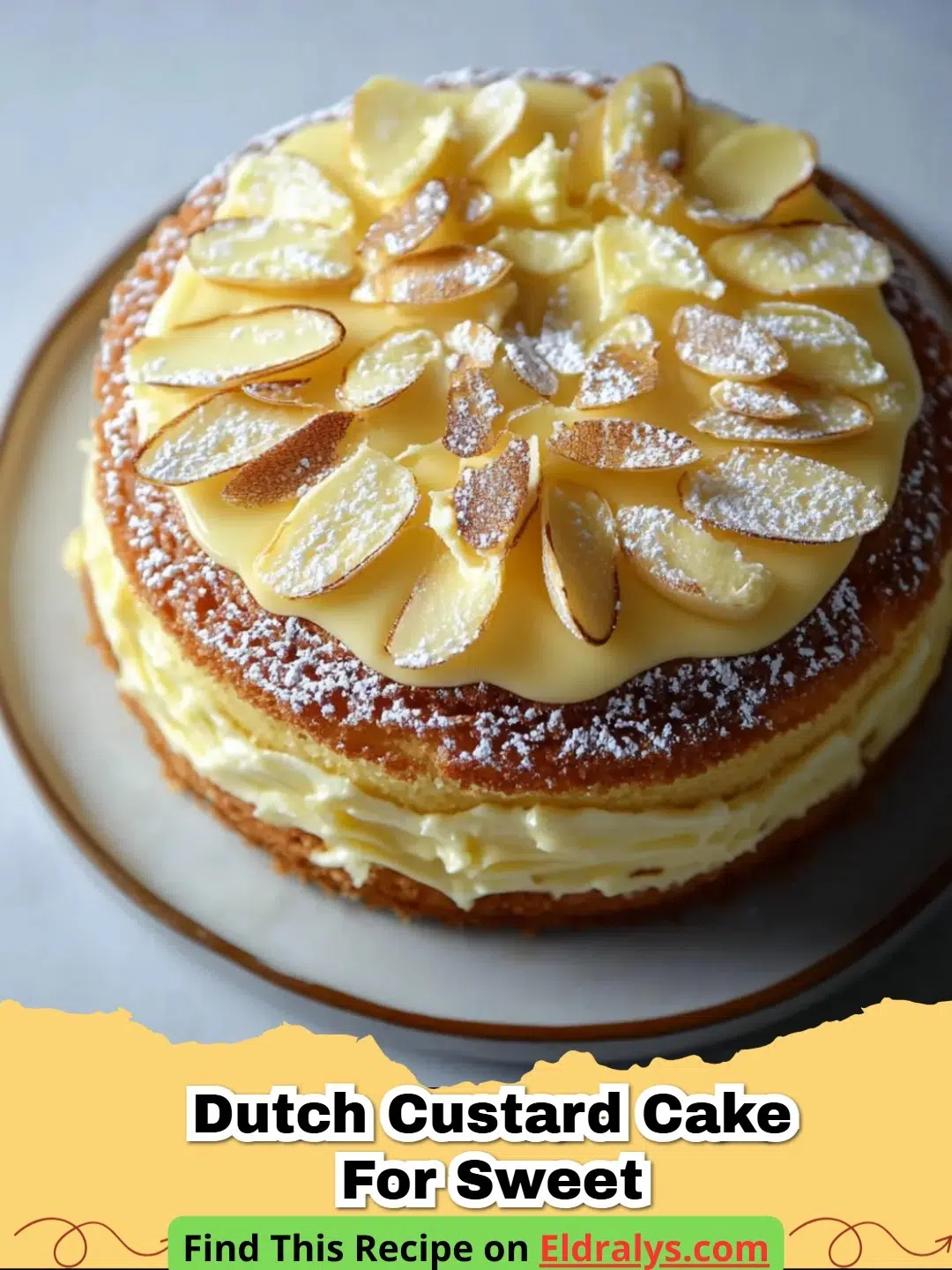
Dutch Custard Cake is a dessert that transcends the boundaries of simple baking, offering a sensory journey through layers of buttery cake and silky, egg-rich cream. If you have ever wandered through the cobblestone streets of Amsterdam, you might have caught the scent of warm vanilla and butter wafting from a local bakery. This Dutch Custard Cake captures that exact essence, providing a nostalgic embrace for anyone who values the finer details of European pastry. It is not just a cake; it is an experience of textures where the crumb meets the cream in a perfect, harmonious dance. Whether you are hosting a festive gathering or simply seeking a quiet afternoon treat, this recipe promises to become a staple in your culinary repertoire.
For generations, the Dutch Custard Cake has been a centerpiece of celebration and comfort in households across the Netherlands. Its unique structure, featuring a dense, almost shortbread-like base that yields to a luscious custard center, makes it distinct from the light, airy sponges common in other cultures. By following this guide, you will master the delicate balance required to achieve that elusive, melt-in-your-mouth quality that characterizes the finest Dutch Custard Cake. Every slice tells a story of quality ingredients, patience, and a love for the craft of baking that turns simple pantry staples into a masterpiece.
The Cultural Heritage of Dutch Baking
The history of Dutch baking is deeply rooted in the availability of high-quality dairy and exotic spices brought back through ancient trade routes. The Dutch Custard Cake is a testament to this history, utilizing the richness of full-fat milk and local butter to create a dessert that is as satiating as it is elegant. In many Dutch families, recipes for this specific cake are passed down with pride, often featuring small secret variations like a hint of almond or a specific brand of vanilla bean. This tradition reflects the importance of food in bringing people together, a sentiment we share when we prepare The Ultimate Homemade Soft Fluffy French Bread Recipe for a Soul-Warming Kitchen alongside our sweet treats.
Why You’ll Love It
You will absolutely adore this Dutch Custard Cake because it offers a sophisticated profile without requiring professional-level complexity. The primary appeal lies in its dual texture: a sturdy, golden exterior that protects a heart of molten, velvet-smooth custard. It provides a level of richness that is satisfying but never cloying, making it an excellent accompaniment to a strong cup of coffee or a delicate herbal tea. This Dutch Custard Cake is also surprisingly versatile, allowing for seasonal tweaks while maintaining its core identity. Its ability to be prepared ahead of time makes it a dream for hosts who want to impress their guests without spending the entire evening in the kitchen. Once you experience the first bite of this Dutch Custard Cake, you will understand why it is a beloved classic.
The Science Behind the Perfect Custard Set
Achieving the perfect consistency in a Dutch Custard Cake requires an understanding of custard chemistry and how heat interacts with egg proteins. The custard must be thick enough to hold its shape when sliced but soft enough to provide that characteristic creaminess. This is achieved by precise timing and the gradual incorporation of ingredients. If the heat is too high, the proteins tighten too quickly, leading to a rubbery texture; if too low, the cake will fail to set. The Dutch Custard Cake relies on the moisture from the cake batter to steam the custard layer gently from the outside in. This symbiotic relationship between the two layers is what makes the Dutch Custard Cake a marvel of home-baking engineering.
Ingredients
To create the perfect Dutch Custard Cake, you will need high-quality ingredients that allow the natural flavors to shine. Focus on fresh eggs and real butter for the best results.
- 2 cups all-purpose flour
- 1 cup granulated sugar
- 1/2 cup unsalted butter, softened
- 2 large eggs (for the cake batter)
- 1 cup whole milk
- 3 large egg yolks (for the custard)
- 1/2 cup heavy cream
- 1 teaspoon vanilla bean paste
- 1/4 teaspoon salt
- 1/2 teaspoon almond extract
Notes and Substitutions
If you do not have vanilla bean paste, high-quality vanilla extract can be used in a 1:1 ratio. For a richer flavor, you can substitute the whole milk with evaporated milk. For those looking for different breakfast textures, you might enjoy The Most Heavenly and Easy Blueberry Fritters That Will Melt Your Heart as an alternative on a busy morning.
Equipment
Having the right tools is essential for a smooth baking process. You will need a 9-inch springform pan to ensure easy removal without damaging the layers. A stand mixer or electric hand mixer is vital for creaming the butter and sugar effectively. A fine-mesh sieve helps in achieving a lump-free custard. Lastly, use a digital thermometer to check the internal set if you are a precision baker.
Instructions
- Step 1: Preheat your oven to 350°F (175°C) and generously grease your 9-inch springform pan with butter.
- Step 2: In a large bowl, cream together the softened butter and granulated sugar until the mixture is pale and fluffy.
- Step 3: Add the two whole eggs one at a time, beating well after each addition, then stir in the vanilla bean paste and almond extract.
- Step 4: Gradually fold in the flour and salt until a thick, uniform batter forms; spread two-thirds of this batter into the bottom of the pan.
- Step 5: In a separate saucepan, whisk together the egg yolks, sugar, milk, and heavy cream over medium-low heat until the mixture thickens slightly.
- Step 6: Pour the warm custard mixture over the batter base in the springform pan, spreading it evenly to the edges.
- Step 7: Drop the remaining cake batter by spoonfuls over the custard layer, allowing some of the custard to peek through for a marbled effect.
- Step 8: Bake for 45-50 minutes until the edges are deep golden brown and the center has a slight, firm jiggle.
- Step 9: Remove from the oven and let the Dutch Custard Cake cool completely in the pan before refrigerating for at least 4 hours.
Troubleshooting Common Issues
One common issue when making Dutch Custard Cake is the custard layer sinking too deeply into the base. This usually happens if the base batter is too thin or if the custard is poured while boiling hot. Ensure your butter is softened but not melted to maintain the base's integrity. If your Dutch Custard Cake seems too soft after baking, do not panic; the refrigeration process is where the final 'set' happens. Another tip is to avoid opening the oven door frequently, as sudden temperature drops can cause the custard to collapse or cook unevenly.
Pro Tips
To elevate your Dutch Custard Cake to professional standards, always use room temperature eggs to ensure they emulsify perfectly with the fats. Sift your flour twice to incorporate air, which prevents the dense base from becoming too heavy or tough. When making the custard, constant whisking is the key to preventing lumps and ensuring a silky mouthfeel. For a beautiful finish, brush the top of the cake with a light egg wash before baking to achieve a glossy, mahogany-colored crust. Finally, let the cake rest in the fridge overnight; the Dutch Custard Cake is notoriously better the next day as the moisture redistributes through the crumb.
Serving, Storage & Variations
Serve your Dutch Custard Cake chilled or at room temperature, perhaps with a light dusting of powdered sugar or a dollop of unsweetened whipped cream. To store, wrap the cake tightly in plastic wrap or place it in an airtight container and keep it in the refrigerator for up to four days. For variations, try adding a layer of thinly sliced apples or a handful of fresh berries between the batter and the custard. You can also experiment with spices like cinnamon or cardamom in the batter to create a more autumnal version of this Dutch Custard Cake. Freezing is not recommended as it can compromise the delicate texture of the custard layer.
Nutrition Information
| Nutrient | Amount |
|---|---|
| Calories | 350 kcal |
| Protein | 6g |
| Carbohydrates | 45g |
| Fat | 18g |
| Saturated Fat | 10g |
| Cholesterol | 120mg |
| Sodium | 150mg |
Disclaimer: Nutritional information is an estimate based on standard ingredients and serving sizes.


Conclusion
Mastering the Dutch Custard Cake is a rewarding pursuit that brings the sophisticated charm of Dutch patisserie into your own home. With its contrasting layers and rich, nostalgic flavor, it is a dessert that never fails to impress. By following the tips and techniques outlined here, you can ensure a perfect result every time you bake. We hope this Dutch Custard Cake brings joy to your table and warmth to your heart. Happy baking, and enjoy the blissful taste of this timeless European classic with your family and friends!
FAQs
How do I prevent the custard from curdling in Dutch Custard Cake?
To prevent curdling, ensure you temper the eggs by slowly whisking in the warm milk and bake the cake at a consistent, moderate temperature without over-mixing the batter.
Can I make Dutch Custard Cake ahead of time?
Yes, Dutch Custard Cake is actually better when made a day in advance as it allows the custard layer to fully set and the flavors to deepen in the refrigerator.
What is the best way to store leftovers?
Leftovers should be covered tightly and stored in the refrigerator for up to 4 days. It is best served chilled or at room temperature.

Traditional Dutch Custard Cake
- Total Time: 1 hour 5 minutes
- Yield: 10 servings 1x
- Diet: Vegetarian
Description
A rich, multi-layered dessert featuring a buttery cake base and a velvet-smooth vanilla custard center.
Ingredients
2 cups all-purpose flour
1 cup granulated sugar
1/2 cup unsalted butter, softened
2 large eggs
1 cup whole milk
3 large egg yolks
1/2 cup heavy cream
1 teaspoon vanilla bean paste
1/4 teaspoon salt
Instructions
Step 1: Preheat oven to 350°F and grease a 9-inch springform pan.
Step 2: Cream butter and 3/4 cup of sugar until light and fluffy.
Step 3: Mix in whole eggs and vanilla until combined.
Step 4: Fold in flour and salt to create a thick batter; press 2/3 into the pan.
Step 5: Whisk yolks, remaining sugar, milk, and cream over low heat until thickened.
Step 6: Pour custard over the base and top with dollops of remaining batter.
Step 7: Bake for 45 minutes until golden and set.
Step 8: Cool completely and refrigerate for 4 hours before serving.
Notes
Ensure the cake is fully chilled before slicing to maintain the integrity of the custard layer.
- Prep Time: 20 minutes
- Cook Time: 45 minutes
- Category: Dessert
- Method: Baking
- Cuisine: Dutch
Nutrition
- Serving Size: 1 slice
- Calories: 350 kcal
- Sugar: 25g
- Sodium: 150mg
- Fat: 18g
- Saturated Fat: 10g
- Unsaturated Fat: 6g
- Trans Fat: 0g
- Carbohydrates: 45g
- Fiber: 1g
- Protein: 6g
- Cholesterol: 120mg
Related posts:
 The Ultimate Cowboy Steak with Truffle Honey Butter That Will Melt Your Heart
 The Most Irresistible Honey Garlic Steak Bites That Will Melt Your Heart
 The Most Divine High Protein Sugar-Free Monkey Bread That Will Melt Your Soul
 The Most Legendary Authentic Thai Crying Tiger (Sua Rong Hai) Steak Recipe That Will Heal Your Soul

Leave a Reply