
Introduction to Your New Favorite Holiday Dessert
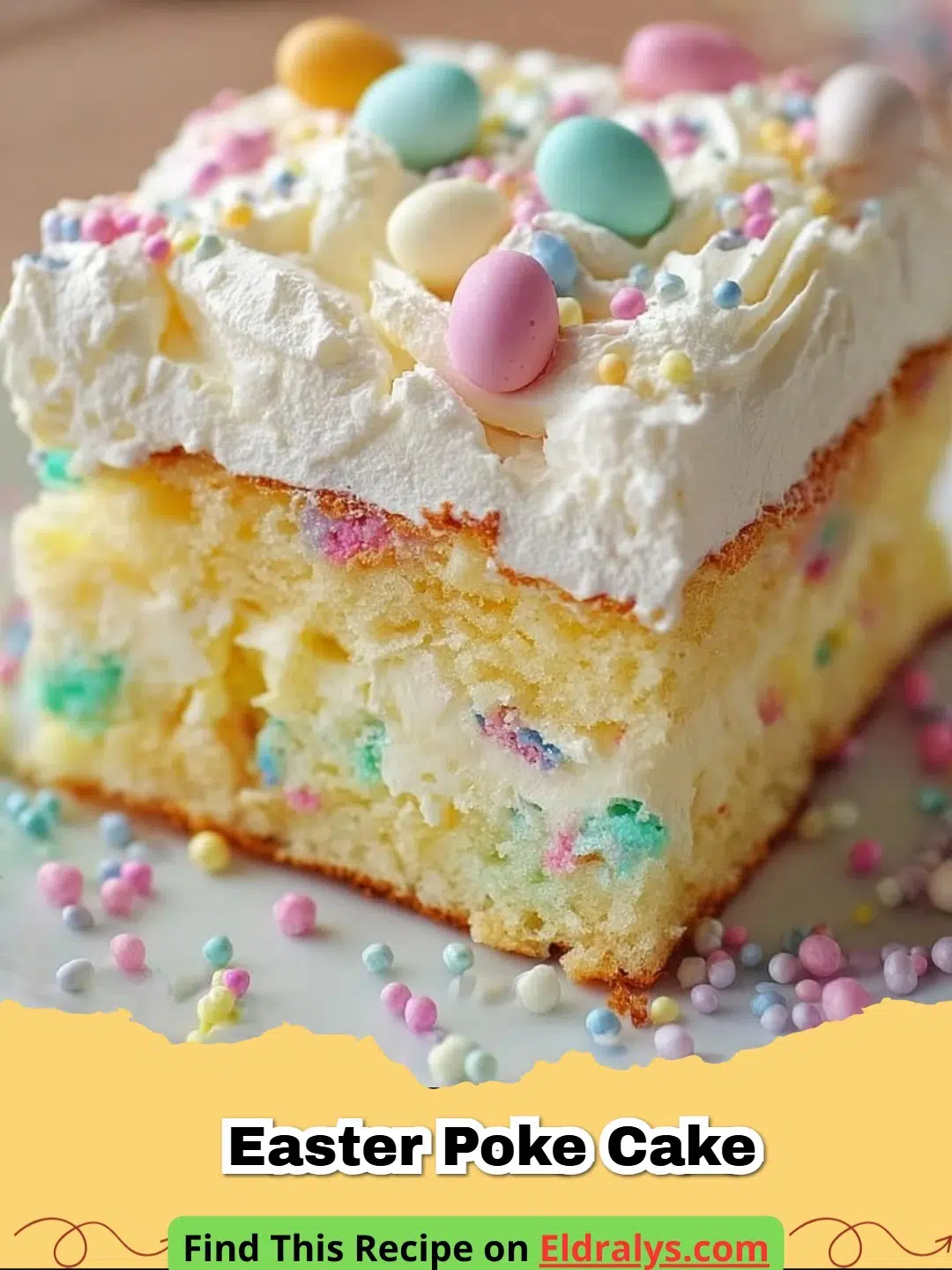
Easter Poke Cake is the ultimate centerpiece for your spring celebrations, combining vibrant pastel colors with a moist, melt-in-your-mouth texture that everyone loves. This festive treat is more than just a dessert; it is a nostalgic nod to classic American baking that has been updated for the modern kitchen. Whether you are hosting a large family gathering or a small intimate brunch, this cake brings a splash of color to the table.
The beauty of the Easter Poke Cake lies in its simplicity and the joy it brings to children and adults alike. By using a light vanilla base and infusing it with fruity gelatin, you create a dessert that is as flavorful as it is beautiful. To complete your holiday spread, consider serving this alongside The Most Adorable Easter Bunny Egg Toasts to Brighten Your Holiday Brunch for a truly cohesive and magical seasonal experience.
The Fascinating History and Evolution of the American Poke Cake
Before we dive into the specifics of our Easter Poke Cake, it is helpful to understand where this beloved tradition originated. The concept of the poke cake was first popularized in the late 1960s and early 1970s as a clever marketing strategy to encourage home bakers to use flavored gelatin. It quickly became a staple at potlucks because of its ability to stay moist for days, unlike traditional sponges that could dry out under the heat of a party.
Over the decades, the recipe has evolved from simple strawberry-infused sheets to elaborate multi-layered masterpieces. The Easter version specifically focuses on the use of light, airy textures and spring-themed decorations. To learn more about the technical foundations of this dessert style, you can explore the culinary background of poke cake history through high-authority culinary archives.
Why You’ll Love It
You will fall in love with this Easter Poke Cake because it strikes the perfect balance between sweet, fruity, and creamy. It is an exceptionally forgiving recipe, making it ideal for novice bakers who want to impress without the stress of complicated frosting techniques. The internal "stripes" of color hidden inside the white cake create a wonderful surprise when you cut into each slice.
Furthermore, this cake is highly customizable. You can adjust the colors to match your specific Easter decor or even swap out the gelatin for pudding or fruit purees. If you enjoy desserts with a festive aesthetic, you might also find inspiration in The Most Enchanting Speckled Easter Cake to Make Your Holiday Glow, which offers a different but equally stunning look for your holiday table.
Creating a Symphony of Spring Colors in Your Baking
Color theory plays a massive role in why the Easter Poke Cake is so visually appealing. We naturally associate soft pinks, greens, and yellows with the renewal of spring. By strategically poking holes and pouring different gelatin colors, you are essentially painting the inside of the cake. This technique ensures that every single bite is infused with moisture and flavor.
The contrast between the bright interior and the snowy white topping makes the decorations pop. Using mini chocolate eggs, pastel sprinkles, or even edible flowers can elevate the presentation from a simple sheet cake to a professional-looking gallery piece. It is the perfect project for involving kids in the kitchen, as they will love the "poking" process and the final decorating stage.
The Science of Moist Cake: Why Gelatin Filling Works
From a scientific perspective, the Easter Poke Cake works so well because the gelatin acts as a humectant. Traditional cakes lose moisture to the air as soon as they are sliced. However, the set gelatin inside the cake structure traps moisture and provides a silky mouthfeel that mimics high-end patisserie techniques. This is why the cake actually tastes better on the second day after the flavors have had time to fully develop.
Ingredients
To create the perfect Easter Poke Cake, you will need a few pantry staples and some festive extras. The base is a classic white cake, which provides the best canvas for the pastel colors to shine. High-quality vanilla extract is recommended to ensure the cake has a professional flavor profile.
Notes and Substitutions
- Cake Mix: While a box mix is convenient, you can use a homemade white cake recipe if preferred.
- Gelatin: Strawberry and lime are the go-to choices for pink and green, but lemon also adds a lovely yellow hue.
- Topping: If you find stabilized whipped cream too sweet, a light cream cheese frosting is a delicious alternative.
Equipment
You will need a 9x13 inch baking pan, which is the standard size for most poke cakes. A large mixing bowl and an electric hand mixer are essential for the cake batter and the frosting. Most importantly, you need a tool for poking holes; the rounded handle of a wooden spoon is the industry standard for creating the perfect sized wells.
Instructions
Follow these steps to create your masterpiece. Consistency is key when pouring the liquid.
- Step 1: Preheat your oven to 350°F and grease your 9x13 baking pan thoroughly.
- Step 2: Prepare the white cake batter according to the package or recipe instructions and pour it into the pan.
- Step 3: Bake the cake for 25-30 minutes until a toothpick comes out clean, then let it cool for exactly 10 minutes.
- Step 4: Use the handle of a wooden spoon to poke holes across the entire surface of the cake, spaced about an inch apart.
- Step 5: Mix each gelatin flavor with 1 cup of boiling water in separate bowls until fully dissolved.
- Step 6: Carefully pour the liquid gelatin into the holes, alternating colors to create a beautiful pastel pattern inside the cake.
- Step 7: Refrigerate the cake for at least 4 hours (overnight is better) to allow the gelatin to set.
- Step 8: Spread the whipped topping evenly over the cold cake and decorate with Easter candies and sprinkles.
Pro Tips
For the best Easter Poke Cake, do not poke the holes all the way to the bottom of the pan; leave a thin layer of cake intact to prevent the gelatin from pooling. Ensure the gelatin is still warm when pouring, as it flows better into the crumb. If you want more defined colors, use a small squeeze bottle or a dropper to fill each hole individually instead of pouring from a bowl.


Serving, Storage & Variations
Serve the Easter Poke Cake chilled for the best flavor experience. It should be kept in the refrigerator until the moment of service to keep the topping stable. Leftovers will stay fresh for up to 3 days if covered tightly. For a variation, try a "Lemon-Berry" version using lemon cake mix and raspberry gelatin for a sophisticated flavor profile.
Nutrition Information
| Nutrient | Amount |
|---|---|
| Calories | 320 kcal |
| Protein | 4g |
| Carbohydrates | 52g |
| Fat | 12g |
| Saturated Fat | 6g |
| Sodium | 280mg |
| Sugar | 38g |
Disclaimer: The nutrition information provided is an estimate based on standard ingredients and serving sizes.
Conclusion
This Easter Poke Cake is a delightful addition to any spring celebration, offering a burst of joy in every slice. Its combination of ease, visual appeal, and delicious flavor makes it a recipe you will return to year after year. Enjoy the process of creating this festive treat and sharing it with your loved ones this holiday season!
FAQs
How far in advance can I make Easter Poke Cake?
You can prepare the cake and fill it with gelatin up to 24 hours in advance. For the best texture, wait to add the final whipped topping and fresh candy decorations until shortly before serving to prevent the colors from bleeding.
Can I use different gelatin flavors?
Absolutely! While strawberry and lime are classic for the pink and green Easter look, you can use lemon, orange, or berry blue to create a wider rainbow of colors throughout the sponge.
Why is my poke cake soggy?
Sogginess usually occurs if you add too much liquid or if the cake hasn't had enough time to cool before adding the gelatin. Ensure you follow the specific liquid-to-gelatin ratio in the recipe for a moist but firm crumb.

Magical Easter Poke Cake
- Total Time: 4 hours 50 minutes
- Yield: 12-15 servings 1x
- Diet: Vegetarian
Description
A festive and moist vanilla cake filled with colorful pastel gelatin and topped with fluffy whipped frosting.
Ingredients
1 box (15.25 oz) white cake mix (plus ingredients required by the box)
1 package (3 oz) Strawberry Gelatin
1 package (3 oz) Lime Gelatin
2 cups boiling water
1 container (8 oz) frozen whipped topping, thawed
1/2 cup Easter sprinkles
1 cup mini chocolate Easter eggs
Instructions
Step 1: Bake the white cake in a 9x13 inch pan according to the package directions.
Step 2: Let the cake cool for 10-15 minutes until it is warm but not hot.
Step 3: Using the handle of a wooden spoon, poke holes across the top of the cake every inch.
Step 4: Dissolve each flavor of gelatin in 1 cup of boiling water in separate bowls.
Step 5: Slowly pour the gelatin into the holes, alternating colors for a festive look.
Step 6: Cover and refrigerate for at least 4 hours to allow the gelatin to set into the cake.
Step 7: Spread the whipped topping over the surface and decorate with sprinkles and chocolate eggs.
Notes
For best results, use a white cake mix to make the gelatin colors really stand out. Do not use sugar-free gelatin as it may not set with the same vibrancy.
- Prep Time: 20 minutes
- Cook Time: 30 minutes
- Category: Dessert
- Method: Baking
- Cuisine: American
Nutrition
- Serving Size: 1 slice
- Calories: 320 kcal
- Sugar: 38g
- Sodium: 280mg
- Fat: 12g
- Saturated Fat: 6g
- Unsaturated Fat: 5g
- Trans Fat: 0g
- Carbohydrates: 52g
- Fiber: 1g
- Protein: 4g
- Cholesterol: 35mg



Leave a Reply