
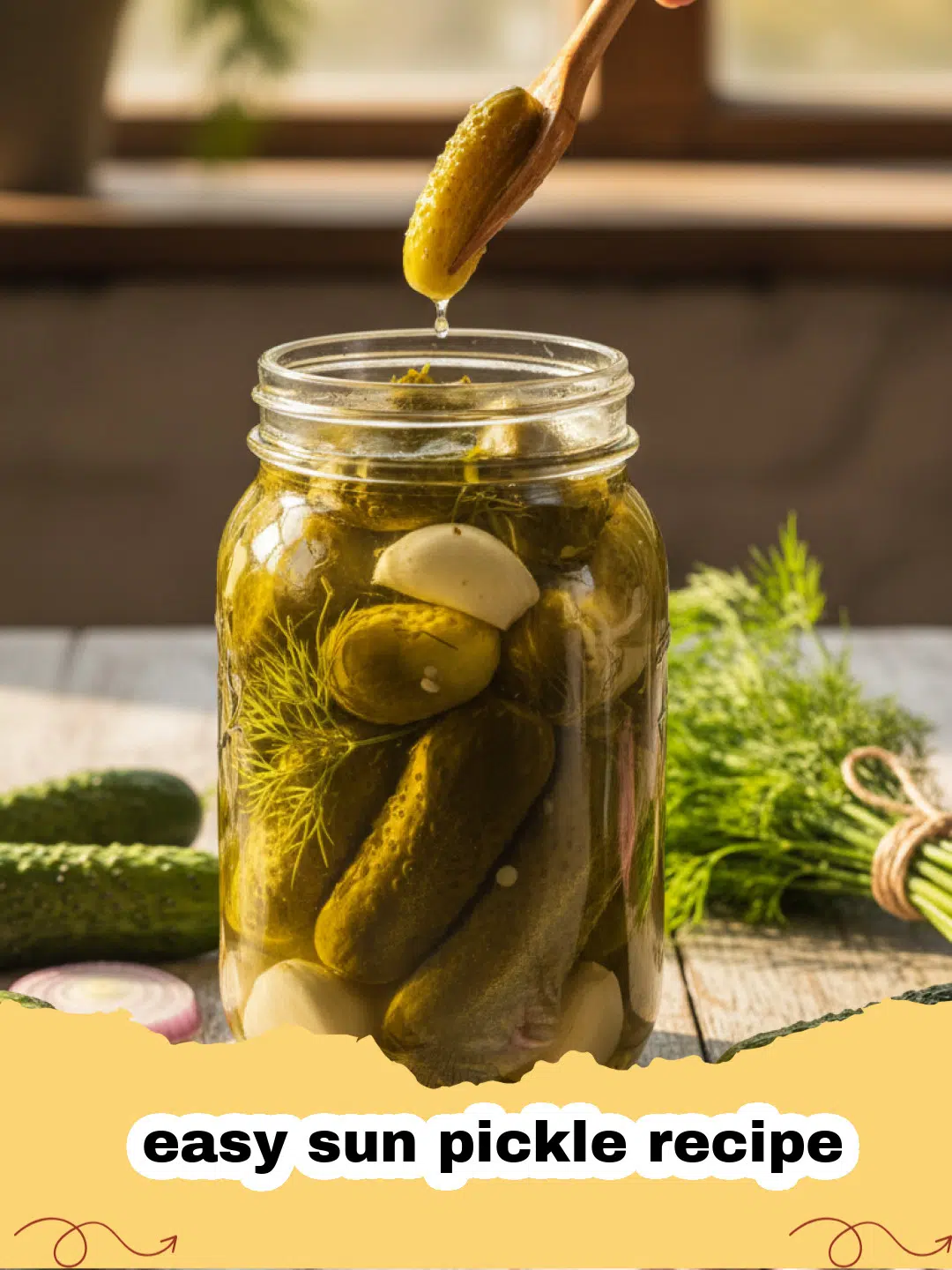
This easy sun pickle recipe is exactly the kind of kitchen magic that makes a home feel like a sanctuary during the long, golden days of July. I remember standing on my grandmother's back porch, the humidity thick and the smell of honeysuckle in the air, watching her line up wide-mouth jars along the railing. She didn't use a stove or a fancy pressure canner; she simply let the sun do the work. There is something profoundly satisfying about harnessing the heat of a summer afternoon to transform a humble cucumber into a crisp, tangy snack. This easy sun pickle recipe brings back those memories every time I hear the faint pop of a jar lid or catch the scent of fresh dill. It is a slow-living staple that teaches patience and rewards you with the most incredible crunch you will ever experience. If you have a few cucumbers and a sunny spot on your porch, you are ready to start this journey.
Why This Recipe is a Must-Try
- Natural Fermentation: This easy sun pickle recipe relies on traditional lacto-fermentation, which creates healthy probiotics and a complex flavor profile that store-bought vinegar pickles simply cannot match.
- No-Boil Method: Forget about heating up your kitchen with a boiling water bath; the sun provides all the warmth needed to kickstart the pickling process, making it perfect for hot summer days.
- Superior Crunch: Because the cucumbers are never cooked, they retain a remarkable snap that is the hallmark of a high-quality sun pickle.
- Effortless Customization: Whether you like them spicy, garlicky, or heavy on the dill, this easy sun pickle recipe serves as a perfect canvas for your culinary creativity.
Using this easy sun pickle recipe is about more than just food; it is about connecting with a method of preservation that has been used for generations. When you place those jars in the sun, you are participating in a ritual that celebrates the abundance of the garden and the power of nature. It is a fantastic project for kids, too, as they can watch the brine turn cloudy and see the science of fermentation happen right before their eyes.
Key Ingredient Notes
The success of your easy sun pickle recipe hinges on the quality of your ingredients. First and foremost, you must use pickling cucumbers, often called Kirbys. These have a thick, bumpy skin and a firm interior that holds up during the fermentation process. Standard slicing cucumbers or English cucumbers are too watery and will turn mushy in the heat. For the best results, pick them fresh from the garden or buy them from a local farmer's market on the day you plan to jar them.
The salt you choose is equally critical. You must use non-iodized salt, such as sea salt, kosher salt, or pickling salt. Iodine can inhibit the growth of the beneficial bacteria we need for this easy sun pickle recipe and can also turn your brine a muddy, unappealing color. Water quality matters as well; if your tap water is heavily chlorinated, it may interfere with fermentation. Using filtered or spring water ensures that your easy sun pickle recipe turns out perfectly every time. For storing your creations, I highly recommend using high-quality Basics Glass Food Storage jars to ensure a proper seal and durability.

Step-by-Step Guide with Pro Tips
Starting your easy sun pickle recipe begins with a thorough cleaning. Wash your cucumbers in cold water, scrubbing away any dirt or debris. A pro tip is to slice a tiny sliver off the blossom end of each cucumber; this end contains enzymes that can cause softening, and removing it helps keep your pickles extra crunchy. Once prepped, you can leave them whole, slice them into spears, or cut them into thick coins depending on your preference.
Next, pack your jars tightly. You want to wedge the cucumbers in so they don't float to the top once the brine is added. Between the cucumbers, nestle in several cloves of smashed garlic, a generous bunch of fresh dill (heads, leaves, and stems all work), and any dry spices like mustard seeds or black peppercorns. Pouring the room-temperature brine over the top is the final step before the sun takes over. This easy sun pickle recipe is incredibly forgiving, but make sure the cucumbers are fully submerged under the liquid to prevent mold from forming.
Place your jars in a spot that receives direct sunlight for at least 6 to 8 hours a day. A porch railing, a driveway, or a sunny windowsill are all great options. Over the next two to three days, you will notice the brine becoming slightly cloudy—this is a sign that the easy sun pickle recipe is working! Taste a pickle after 48 hours; if it has the tang you desire, move it to the refrigerator. If not, give it one more day in the sun. For a perfect summer meal, try pairing these pickles with a main course featuring a smoky BBQ Chicken Rub to balance the acidity.
Variations & Serving Suggestions
One of the best parts of this easy sun pickle recipe is how easily you can adapt it. If you enjoy a bit of heat, toss in a few dried red chili flakes or a sliced jalapeño to create "spicy sun pickles." For a more aromatic profile, add a few bay leaves or even a cinnamon stick for a unique, old-world flavor. You can even experiment with adding grape leaves to the jar; the tannins in the leaves help keep the pickles even firmer during the fermentation process.
When it comes to serving your easy sun pickle recipe, the possibilities are endless. They are a classic addition to any picnic spread, sitting perfectly alongside sandwiches or burgers. If you are hosting a more sophisticated dinner, these pickles provide a bright, acidic contrast to rich dishes like an Ultimate Boursin Chicken. I also love dicing them up to make a fresh, chunky tartar sauce or simply enjoying them straight from the jar as a low-calorie afternoon snack. This easy sun pickle recipe is so versatile that you will find yourself reaching for a jar regardless of what is on the menu.
Nutrition Information
| Nutrient | Amount per Serving |
|---|---|
| Calories | 15 kcal |
| Total Fat | 0.1g |
| Saturated Fat | 0g |
| Trans Fat | 0g |
| Unsaturated Fat | 0g |
| Cholesterol | 0mg |
| Sodium | 680mg |
| Carbohydrates | 3g |
| Fiber | 1g |
| Sugar | 1.5g |
| Protein | 0.5g |
Conclusion
Mastering this easy sun pickle recipe is a gateway to the wonderful world of fermentation. It is a simple, rewarding process that transforms ordinary garden vegetables into extraordinary pantry staples. By following these steps and using the power of the sun, you are creating something healthy, delicious, and deeply rooted in tradition. I hope this easy sun pickle recipe becomes a summer highlight in your home, just as it has in mine for many years. Happy pickling!
FAQs
How long do sun pickles last in the fridge?
When properly fermented and kept in the refrigerator, sun pickles can last for up to 4 to 6 months, although they are best enjoyed within the first 2 months for maximum crunch.


Why is my brine turning cloudy?
Cloudy brine is a perfectly normal and healthy sign of the lacto-fermentation process. It indicates that the beneficial bacteria are doing their job of converting sugars into lactic acid.
Can I use regular table salt for this recipe?
It is not recommended to use regular table salt because it often contains iodine and anti-caking agents, which can darken the pickles and inhibit the fermentation process. Stick to sea salt or kosher salt.
What if it rains while my pickles are outside?
If the weather turns sour, simply bring your jars inside and place them on a sunny windowsill. The process might take an extra day without direct outdoor heat, but they will still ferment successfully.

Old-Fashioned Easy Sun Pickle Recipe
- Total Time: 3 days
- Yield: 2 quarts 1x
Description
A traditional, no-boil sun pickle recipe that uses natural fermentation and the warmth of the sun to create the crunchiest, tangiest pickles imaginable.
Ingredients
2 lbs pickling cucumbers (Kirby style)
4 cups filtered water
3 tbsp sea salt or pickling salt (non-iodized)
4 cloves garlic, smashed
1 large bunch fresh dill
1 tsp mustard seeds
1/2 tsp black peppercorns
Optional: 1/2 tsp red pepper flakes for heat
Instructions
Step 1: Wash the cucumbers thoroughly in cold water and trim 1/8 inch off the blossom end of each to ensure they stay crisp.
Step 2: In a pitcher, whisk together the filtered water and the non-iodized salt until the salt is completely dissolved to create your brine.
Step 3: Divide the garlic, dill, mustard seeds, and peppercorns between two clean quart-sized glass jars.
Step 4: Pack the cucumbers into the jars as tightly as possible without crushing them, leaving about an inch of headspace at the top.
Step 5: Pour the brine over the cucumbers until they are completely submerged. If they float, use a clean weight or a smaller glass lid to keep them under the liquid.
Step 6: Close the jars loosely (to allow gases to escape) and place them in a spot with direct sunlight for 2 to 3 days.
Step 7: Taste the pickles after 48 hours. Once they reach your preferred level of tanginess, tighten the lids and move the jars to the refrigerator to stop the fermentation process.
Notes
Always ensure your cucumbers are fully submerged in the brine to prevent spoilage. If you see a white film on top, it is likely Kahm yeast, which is harmless but should be skimmed off. If the pickles smell 'off' or show colorful mold, discard them.
- Prep Time: 20 minutes
- Cook Time: 72 hours
- Category: Sauces Dressings & Condiments
- Cuisine: American
Nutrition
- Serving Size: 1 pickle
- Calories: 15 kcal
- Sugar: 1.5g
- Sodium: 680mg
- Fat: 0.1g
- Saturated Fat: 0g
- Unsaturated Fat: 0g
- Trans Fat: 0g
- Carbohydrates: 3g
- Fiber: 1g
- Protein: 0.5g
- Cholesterol: 0mg



Leave a Reply