
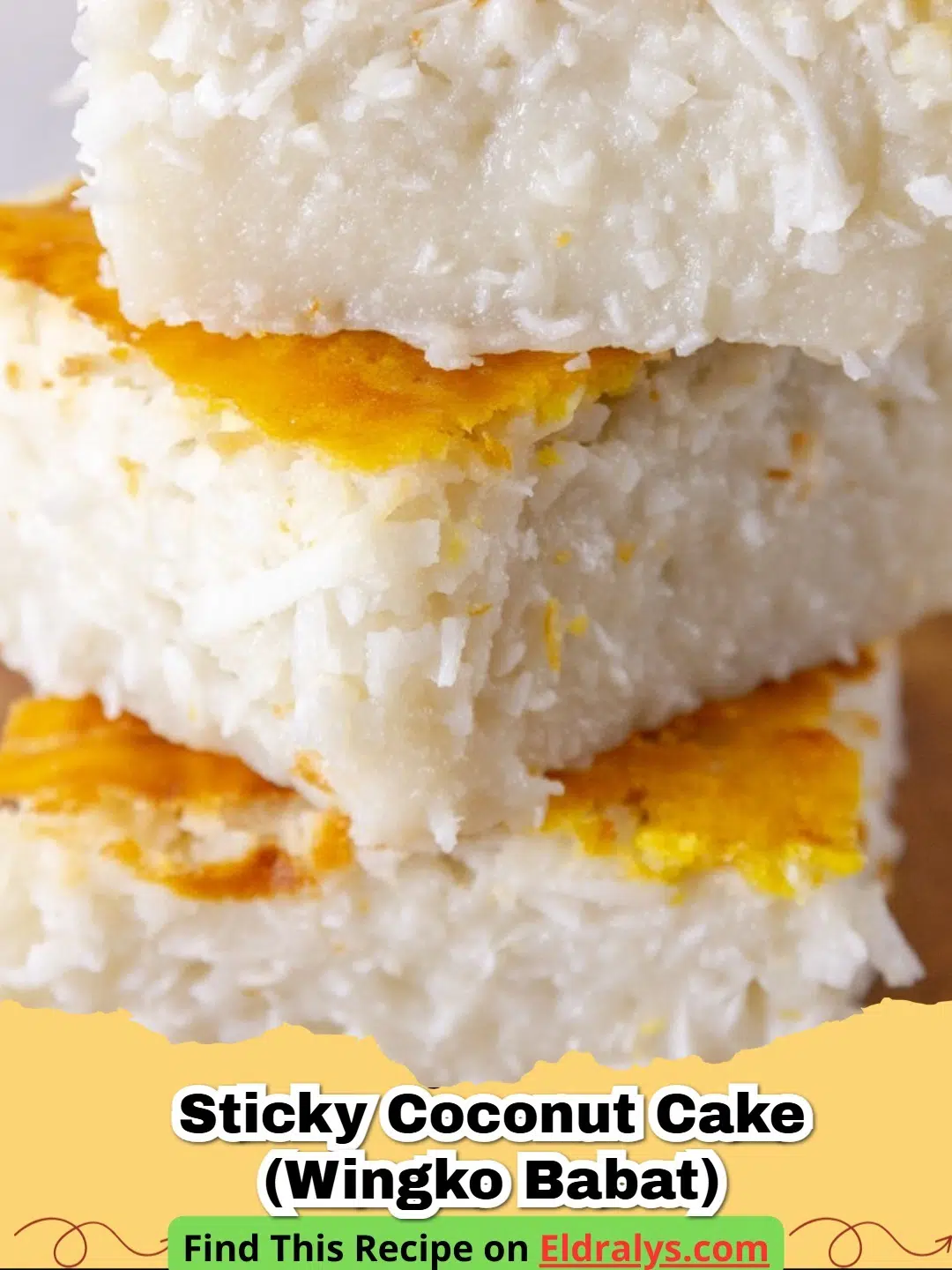
Sticky Coconut Cake (Wingko Babat) is a culinary treasure from Indonesia that offers a unique combination of nutty, toasted coconut flavors and a delightfully chewy, sticky texture that is hard to resist. This traditional snack, originating from the town of Babat but famously associated with Semarang in Central Java, has warmed the hearts of locals and travelers alike for generations. If you have ever walked through an Indonesian train station or a bustling traditional market, the intoxicating aroma of toasted coconut and caramelized sugar likely led you straight to a vendor selling these warm, round cakes.
Introduction to the Magic of Sticky Coconut Cake (Wingko Babat)
Sticky Coconut Cake (Wingko Babat) is more than just a dessert; it is a piece of cultural history that represents the simplicity and richness of Javanese ingredients. The beauty of this recipe lies in its minimalist approach, using only a handful of staples like glutinous rice flour, coconut milk, and fresh coconut. The result, however, is a complex profile of flavors. The outside becomes beautifully charred and slightly crisp, while the inside remains tender and elastic. For those who love tropical flavors, pairing this cake with The Most Dreamy Pink Coconut Iced Latte That Will Melt Your Soul creates a truly indulgent experience that transports you to a seaside paradise.
Why You’ll Love It
You will absolutely fall in love with Sticky Coconut Cake (Wingko Babat) because of its addictive mouthfeel. Unlike standard flour-based cakes that are light and airy, this cake is dense, satisfying, and deeply aromatic. It is also incredibly versatile; you can bake it in a large pan for a family gathering or cook individual rounds on a griddle for a more rustic, charred look. Because it is naturally gluten-free, it is an inclusive dessert that everyone can enjoy. The natural fats from the coconut provide a richness that satisfies even the most demanding sweet tooth without being overly cloying.
The Essential Ingredients
Creating the perfect Sticky Coconut Cake (Wingko Babat) requires high-quality ingredients. The star of the show is the coconut. In Indonesia, young to medium-aged coconut is used, providing a moist and milky residue. The glutinous rice flour is what provides the 'sticky' element. It is important to note that glutinous rice flour is very different from regular rice flour; the former is sticky and elastic when cooked, while the latter is crumbly. To enhance the tropical profile, some cooks enjoy adding The Most Magical Monkey Butter and bring a tropical Paradise to Your Kitchen as a side topping or even a slight swirl within the batter for an extra layer of fruitiness.
Notes and Substitutions
- Coconut: If fresh shredded coconut is unavailable, use frozen grated coconut (defrosted) rather than dry desiccated coconut if possible.
- Sugar: Traditional recipes use granulated sugar, but palm sugar (Gula Jawa) can be used for a deeper, caramel-like color and flavor.
- Flour: Do not substitute glutinous rice flour with regular flour, or the cake will lose its characteristic chewiness.
Required Equipment
You do not need fancy gadgets to make this traditional treat. A large mixing bowl, a sturdy spatula, and a non-stick pan or baking dish are sufficient. If you are baking it, an 8x8 inch square pan works perfectly to achieve the right thickness. For the most authentic experience, a cast iron griddle or skillet is recommended to get those gorgeous dark spots on the crust.
Instructions for Perfect Results
- Step 1: Combine the shredded coconut, sugar, and salt in a large mixing bowl. Use your hands to massage the sugar into the coconut until it feels moist and the sugar begins to dissolve.
- Step 2: Gradually add the glutinous rice flour to the coconut mixture, tossing lightly to ensure even distribution.
- Step 3: Pour in the coconut milk, beaten egg, and vanilla extract. Stir well until a thick, slightly lumpy paste forms. Ensure there are no large pockets of dry flour.
- Step 4: Preheat your oven to 350°F (175°C) and grease a baking pan with a little bit of butter or coconut oil. Alternatively, heat a non-stick skillet over low-medium heat.
- Step 5: Spread the Sticky Coconut Cake (Wingko Babat) batter into the pan or drop spoonfuls onto the skillet. Flatten the surface slightly with a wet spatula.
- Step 6: Bake for 25-30 minutes until the top is golden brown. If using a skillet, cook for 5-7 minutes per side until charred and cooked through.
- Step 7: Allow the cake to cool slightly before slicing. It is easiest to cut when it is warm but not hot, as the starches will have set slightly.
Pro Tips for the Best Sticky Coconut Cake (Wingko Babat)
To achieve the ultimate Sticky Coconut Cake (Wingko Babat), pay attention to the moisture levels. If the batter feels too dry, add a tablespoon of coconut milk at a time. The final texture should be thick and heavy. For more information on the science of glutinous rice, you can visit this authority resource on glutinous rice. Always cook on low to medium heat; because of the high sugar and fat content, these cakes can burn quickly before the center is fully set.
Serving, Storage & Variations
Serve Sticky Coconut Cake (Wingko Babat) warm for the best texture. It pairs beautifully with a hot cup of Javanese tea or coffee. To store, keep it in an airtight container for up to two days. If it becomes hard, simply microwave it for 15 seconds to bring back the chewiness. For variations, consider adding pieces of jackfruit (nangka) or even a handful of chocolate chips for a modern twist on this classic Indonesian delight.
Nutrition Information
| Nutrient | Amount |
|---|---|
| Calories | 285 kcal |
| Protein | 3g |
| Carbohydrates | 42g |
| Fat | 12g |
Note: The nutritional information provided above is a realistic estimate based on standard ingredients and serving sizes.
Conclusion
Mastering the Sticky Coconut Cake (Wingko Babat) is a rewarding journey into the heart of Indonesian baking. With its rich coconut aroma and satisfyingly chewy texture, it is a snack that appeals to everyone. Whether you are reliving a childhood memory or discovering this treat for the first time, this recipe ensures a perfect batch every time. Happy baking!
FAQs
What is the main ingredient in Sticky Coconut Cake (Wingko Babat)?
The main ingredients are glutinous rice flour (tepung ketan) and freshly shredded coconut, which provide its signature chewy texture and tropical flavor.


Is Sticky Coconut Cake (Wingko Babat) gluten-free?
Yes, naturally! Since it uses glutinous rice flour (which despite the name, contains no gluten), this cake is a perfect treat for those on a gluten-free diet.
Can I use desiccated coconut instead of fresh?
While fresh is best for moisture, you can use unsweetened desiccated coconut. Just rehydrate it with a little bit of warm coconut milk first for the best texture.
How do I store Sticky Coconut Cake (Wingko Babat)?
Store it in an airtight container at room temperature for up to 2 days, or refrigerate for up to a week. Reheat in a pan or microwave to restore its soft, chewy texture.

Sticky Coconut Cake (Wingko Babat)
- Total Time: 40 minutes
- Yield: 12 servings 1x
- Diet: Gluten-Free
Description
A traditional Indonesian glutinous rice and coconut cake that is chewy, sweet, and incredibly aromatic.
Ingredients
2 cups glutinous rice flour
2 cups freshly shredded coconut (unsweetened)
1 cup granulated sugar
3/4 cup thick coconut milk
1 large egg, beaten
1/2 tsp salt
1 tsp vanilla extract
Instructions
Step 1: Mix the shredded coconut, sugar, and salt in a bowl, kneading slightly to release the coconut oils.
Step 2: Add the glutinous rice flour and stir until combined.
Step 3: Incorporate the coconut milk, beaten egg, and vanilla until a thick batter forms.
Step 4: Spread the mixture into a greased 8x8 inch baking pan.
Step 5: Bake at 350°F (175°C) for 25-30 minutes until the top is golden and slightly charred.
Step 6: Let cool for 10 minutes before slicing into rectangles or squares.
Notes
For a more authentic flavor, wrap the cake in banana leaves before baking or grilling.
- Prep Time: 15 minutes
- Cook Time: 25 minutes
- Category: Dessert
- Method: Baking
- Cuisine: Indonesian
Nutrition
- Serving Size: 1 slice
- Calories: 285 kcal
- Sugar: 18g
- Sodium: 110mg
- Fat: 12g
- Saturated Fat: 10g
- Unsaturated Fat: 2g
- Trans Fat: 0g
- Carbohydrates: 42g
- Fiber: 2g
- Protein: 3g
- Cholesterol: 15mg
Related posts:
 The Ultimate Cowboy Steak with Truffle Honey Butter That Will Melt Your Heart
 The Most Irresistible Honey Garlic Steak Bites That Will Melt Your Heart
 The Most Divine High Protein Sugar-Free Monkey Bread That Will Melt Your Soul
 The Most Legendary Authentic Thai Crying Tiger (Sua Rong Hai) Steak Recipe That Will Heal Your Soul

Leave a Reply