
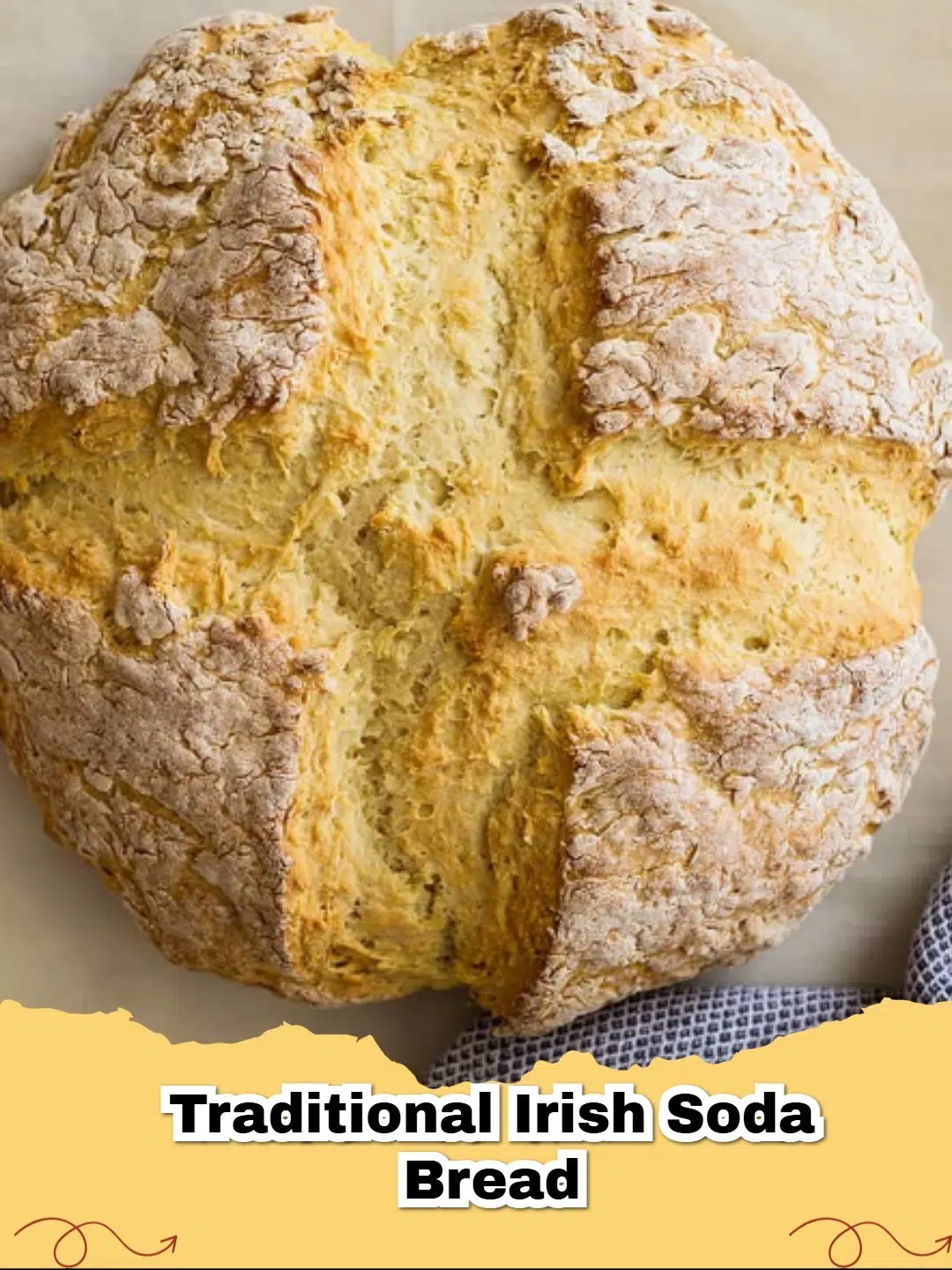
Introduction to Traditional Irish Soda Bread
The smell of a freshly baked Traditional Irish Soda Bread cooling on a wooden counter is a sensory bridge to the rustic, windswept kitchens of the Emerald Isle. This iconic loaf is more than just a side dish; it is a symbol of resilience, simplicity, and a culinary heritage that has survived for centuries. For many, the idea of baking bread at home is daunting because of the patience required for yeast to rise. However, the beauty of Traditional Irish Soda Bread lies in its immediacy. Within less than an hour, you can transform four humble pantry staples into a crusty, golden masterpiece that is as satisfying to break as it is to eat.
Historically, this bread gained popularity in the mid-19th century when bicarbonate of soda became widely available in Ireland. Because the soft wheat grown in the Irish climate didn't produce a high-protein flour suitable for yeasted breads, soda bread became the national solution. It required no expensive ovens—originally baked on griddles or in 'bastable' pots over open peat fires—making it the ultimate commoner's loaf. Today, it remains a beloved staple for St. Patrick's Day and every morning in between, proving that the simplest things in life are often the most enduring. When paired with The Magic of Freshness: The Absolute Easiest Homemade Butter Recipe You’ll Ever Master, this bread becomes a world-class delicacy.
Why You’ll Love It
You will fall in love with Traditional Irish Soda Bread for its incredible efficiency and rustic charm. Unlike other loaves, such as those found in The Ultimate Guide to Fluffy Only Yeast Rolls: Your New Favorite Bread, this recipe bypasses the hours of proofing and kneading. It is the perfect 'emergency bread' for when you realize dinner is missing a starch. The exterior provides a satisfying crunch, while the interior is soft, slightly tangy, and dense enough to soak up the heartiest stews. Its versatility is unmatched, moving seamlessly from a breakfast toast slathered in marmalade to a dinner companion for a thick chowder. Plus, the minimal cleanup of a one-bowl recipe is a dream for any home baker.
Ingredients for Traditional Irish Soda Bread
The integrity of a Traditional Irish Soda Bread relies on the quality of its four basic components. Because there are no hidden fats or complex flavorings, each ingredient must play its part perfectly. You will need 4 cups (580g) of all-purpose flour, which provides the structure. Avoid high-protein bread flours here, as we want a tender crumb. Then, 1½ teaspoons of baking soda act as the leavening agent, reacting immediately with the acid in the 2 cups (470ml) of cold buttermilk. Finally, 1 teaspoon of salt enhances the natural nuttiness of the wheat.
Notes and Substitutions
If you find yourself without buttermilk, do not attempt to use plain milk, as the chemical reaction will fail. You can create a quick DIY version by mixing 1 tablespoon of lemon juice or white vinegar into 2 cups of milk and letting it rest for 10 minutes. For a more authentic 'Brown Bread' version, replace 2 cups of all-purpose flour with whole wheat flour. Some modern variations include adding a tablespoon of sugar or a handful of raisins (often called 'Spotted Dog'), but for a truly Traditional Irish Soda Bread, we stick to the core four.
The Science of the Bake: Why It Works
Understanding the chemistry of Traditional Irish Soda Bread is key to mastering it. The leavening occurs through a chemical reaction between the alkaline baking soda and the acidic buttermilk. As soon as the two touch, they begin producing carbon dioxide bubbles. This is why the dough must be handled gently and moved into the oven quickly. According to historical records on Soda Bread, the 'cross' cut on top was originally meant to help the thick dough cook through the center, but it also became a cultural signature, traditionally said to 'let the devil out' while the bread baked. In reality, it provides a 'score line' that allows the bread to expand without bursting in a messy fashion.
Equipment
One of the best parts of making Traditional Irish Soda Bread is that it requires no specialized gear. You will need a large mixing bowl, a sturdy wooden spoon or your hands, a baking sheet (or a cast iron skillet for an extra-crusty bottom), and a sharp knife for scoring the signature cross. Parchment paper is helpful to prevent sticking, but a light dusting of flour on the pan works just as well.
Instructions
- Step 1: Preheat your oven to 425°F (218°C) and line a baking sheet with parchment paper or a light dusting of flour.
- Step 2: In a large mixing bowl, whisk together the flour, baking soda, and salt until thoroughly combined and aerated.
- Step 3: Make a well in the center of the dry ingredients and pour in the cold buttermilk. Using a wooden spoon or a light hand, stir from the center outward until a shaggy dough forms.
- Step 4: Turn the dough onto a lightly floured surface. Gently fold it over itself just 3-4 times—do not knead! We want to maintain those tiny air bubbles.
- Step 5: Shape the dough into a round loaf approximately 1.5 to 2 inches thick. Place it on the prepared baking sheet.
- Step 6: Use a sharp knife to cut a deep cross into the top of the loaf, about an inch deep, extending nearly to the edges.
- Step 7: Bake for 30-35 minutes. The Traditional Irish Soda Bread is done when it is golden brown and sounds hollow when tapped on the bottom.
- Step 8: Transfer to a wire rack. For a softer crust, wrap the hot bread in a clean tea towel as it cools.
Pro Tips for Success
The most important rule for Traditional Irish Soda Bread is to work fast and stay light. Over-handling the dough is the number one cause of a lead-heavy loaf. Your dough should look slightly 'messy' and shaggy before it goes into the oven; a perfectly smooth dough usually means you've worked it too much. Also, ensure your baking soda is fresh. If it has been sitting in the back of your cupboard for a year, it won't provide the lift needed for a beautiful rise. Finally, don't be afraid to cut deep into the loaf—that cross is essential for even heat distribution.
Serving, Storage & Variations
Traditional Irish Soda Bread is at its absolute peak when served warm, just minutes after leaving the oven. It is traditionally served with salted butter, honey, or a slice of sharp white cheddar. To store, wrap the cooled loaf tightly in plastic wrap or store in an airtight container for up to 2 days. For longer storage, you can freeze slices for up to 3 months. Variations are endless: try adding 1/2 cup of shredded cheddar and 2 tablespoons of chopped chives for a savory twist, or 1 tablespoon of caraway seeds for that classic deli-style aroma. No matter how you serve it, this Traditional Irish Soda Bread is a crowd-pleaser.
Nutrition Information
| Nutrient | Amount |
|---|---|
| Calories | 240 kcal |
| Protein | 8g |
| Carbohydrates | 48g |
| Fat | 1.5g |
| Sodium | 450mg |
| Fiber | 2g |
Note: Nutrition information is an estimate based on standard ingredients and a yield of 12 servings.
Conclusion
Baking a Traditional Irish Soda Bread is a rewarding experience that connects you to generations of home cooks who valued simplicity and soul in their food. This recipe proves that you don't need fancy equipment or hours of time to create something truly extraordinary. Whether you are celebrating your Irish roots or just looking for a reliable, delicious loaf of bread to accompany your weeknight dinner, this recipe will never let you down. Roll up your sleeves, preheat your oven, and enjoy the timeless magic of the Emerald Isle right in your own kitchen.


FAQs
Why is my Traditional Irish Soda Bread so dense?
The most common reason for a dense loaf is overworking the dough. Traditional Irish Soda Bread relies on the reaction between baking soda and buttermilk; if you knead it too much, you knock out the air bubbles and develop too much gluten, resulting in a heavy texture.
Can I use regular milk instead of buttermilk?
No, regular milk lacks the acidity needed to react with the baking soda. If you don't have buttermilk, you can make a substitute by adding one tablespoon of lemon juice or white vinegar to a cup of milk and letting it sit for 5-10 minutes.
What is the purpose of the cross cut on top?
Beyond the folklore of 'letting the devil out,' the cross serves a functional purpose. It allows the heat to penetrate the thickest part of the dough, ensuring the bread cooks evenly and expands without cracking uncontrollably.
How long does soda bread stay fresh?
Because it contains no preservatives or fats (like butter or oil), it is best eaten within 24 hours. However, it makes excellent toast for 2-3 days after baking.

Traditional Irish Soda Bread
- Total Time: 45 minutes
- Yield: 12 servings 1x
- Diet: Vegetarian
Description
An authentic, 4-ingredient Irish bread that requires no yeast and no kneading, yielding a crusty loaf with a soft, tangy center.
Ingredients
4 cups (580g) all-purpose flour
1½ teaspoons baking soda
1 teaspoon salt
2 cups (470ml) cold buttermilk
Instructions
Step 1: Preheat your oven to 425°F (218°C) and line a baking sheet with parchment paper or a light dusting of flour.
Step 2: In a large mixing bowl, whisk together the flour, baking soda, and salt until thoroughly combined.
Step 3: Make a well in the center of the dry ingredients and pour in the cold buttermilk. Stir gently until a shaggy dough forms.
Step 4: Turn the dough onto a lightly floured surface and gently fold it 3-4 times just to bring it together—do not knead.
Step 5: Shape into a round loaf and place on the baking sheet. Cut a deep cross into the top with a sharp knife.
Step 6: Bake for 30-35 minutes until the loaf is golden brown and sounds hollow when tapped on the bottom.
Notes
Ensure the buttermilk is very cold and do not over-mix the dough, or the bread will be tough. Use a sharp knife for the cross cut.
- Prep Time: 10 minutes
- Cook Time: 35 minutes
- Category: Bread
- Method: Baking
- Cuisine: Irish
Nutrition
- Serving Size: 1 slice
- Calories: 240 kcal
- Sugar: 2g
- Sodium: 450mg
- Fat: 1.5g
- Saturated Fat: 0.5g
- Unsaturated Fat: 0.5g
- Trans Fat: 0g
- Carbohydrates: 48g
- Fiber: 2g
- Protein: 8g
- Cholesterol: 2mg



Leave a Reply